EGIS-Logo Back to the homepage Heliostat
Heliostat

      CONTENT:   system description | extensions | specifications | price list || questions & answers     
      IMAGES:   the individual pieces of equipment | standing and hanging arrangements     


human- and ecologically friendly


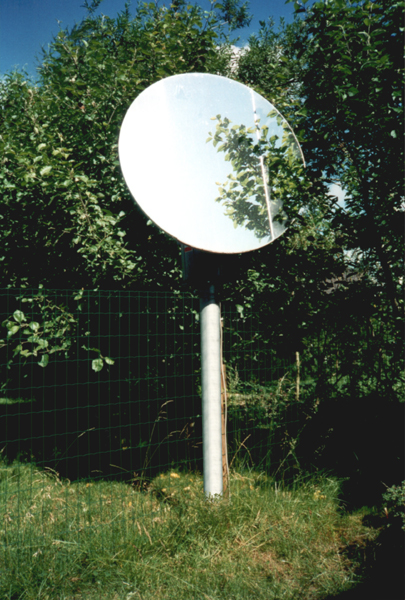
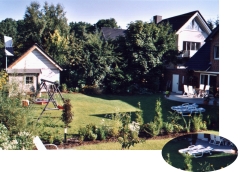
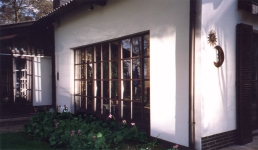
Photo 42Photo 51Photo 52
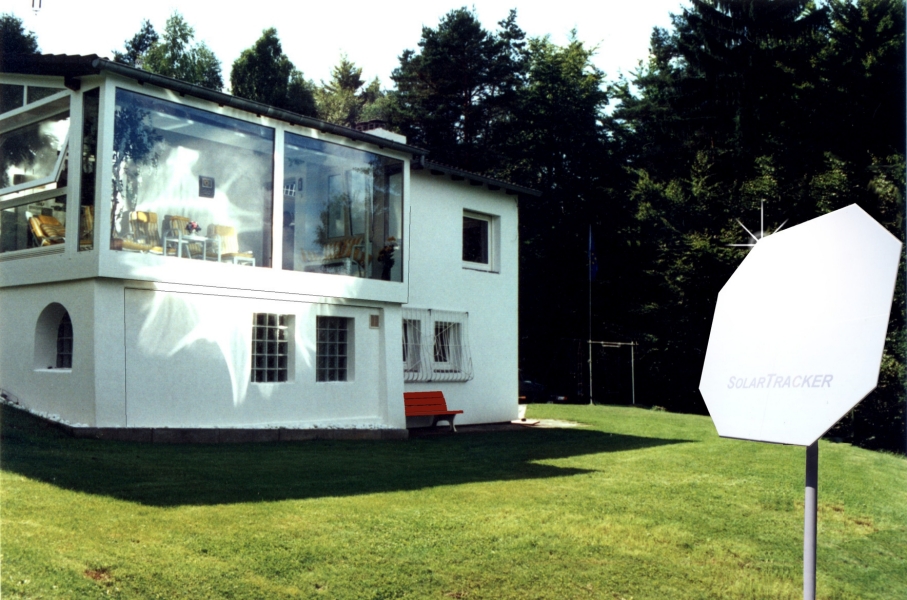
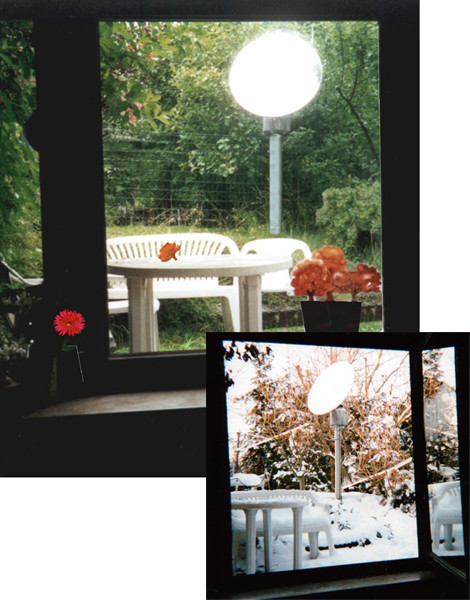
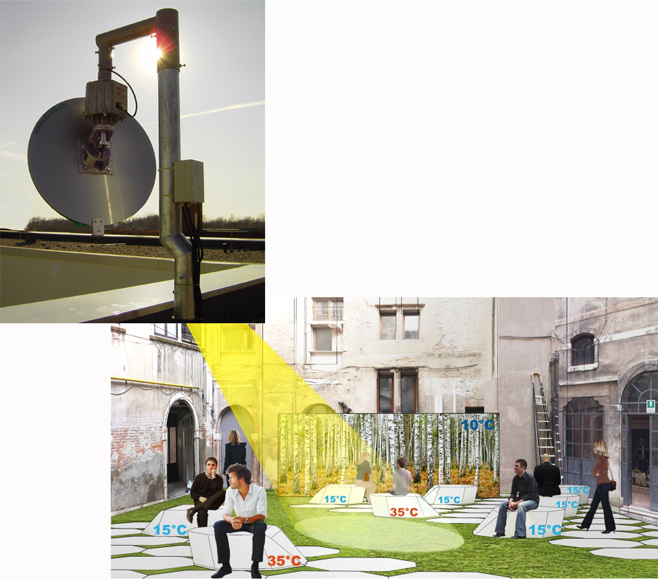
At eyery sunny day get light and heat in the waste cold corner – on the nothern side of the terrace or into the depth of the building!


Sunlight in the depth of your house? Or sun on the northern side of your house? Not only for some moments, but the whole day long?

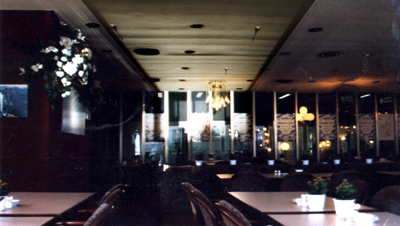
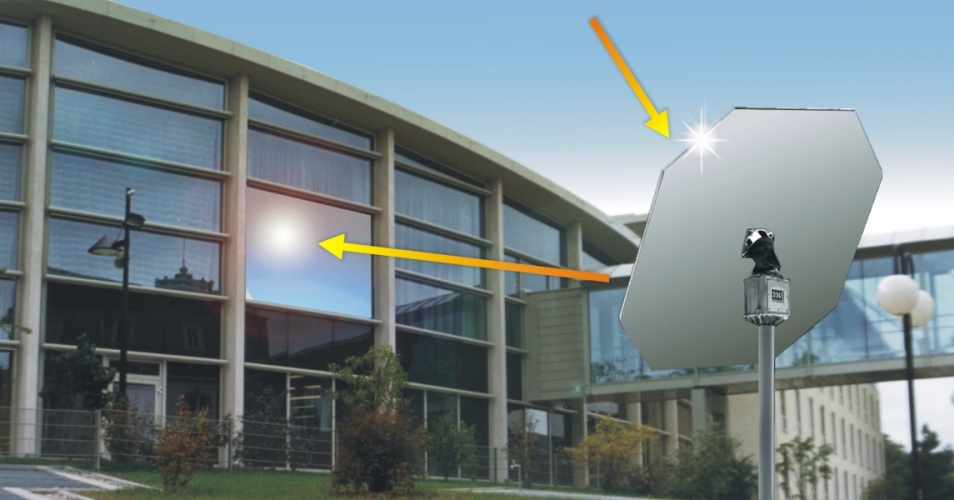
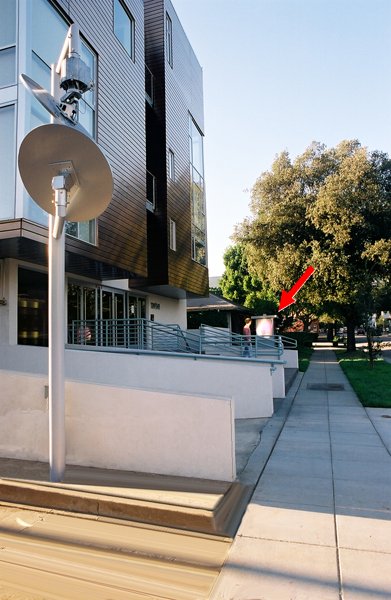
This is made possible by the brand new two-axis-rotor SOLAR-TRACKER using a big mirror. At this sun deflection system the reflection of the mirror (up to 5.5 m2 big) is directed automatically on the wished point and there also, within the physical possibilities, holded – whole day over – permanent, constant and exact!
And so itar with a corrected ammout of days. All 20 seconds both integrated motor are activated for about half a second and again a hardly noticeable position correction is done. You hear nothing – you see nothing.

At eyery sunny day get light and heat in the waste cold corner – on the nothern side of the terrace or into the deep of the building!


Photo 75 As shown here, the heliostat
targets an optical prism to
divide the spectrum of light as
a light fraction demonstration
(Energiegarten Siegen, Westf./
Germany).
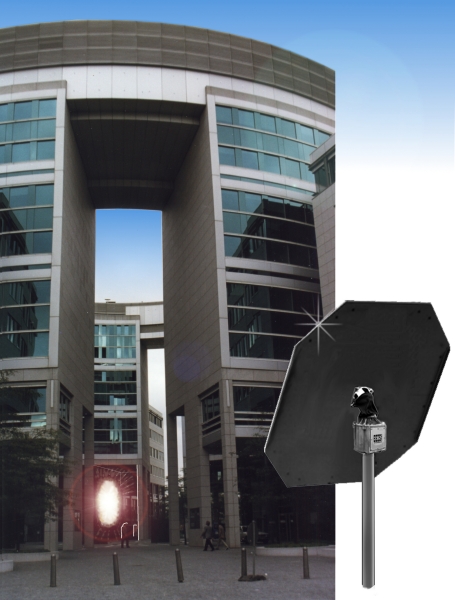
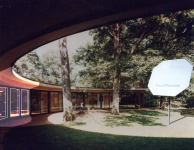
Photo 189 daylight supply of a
building atrium via fixed
deflection reflector
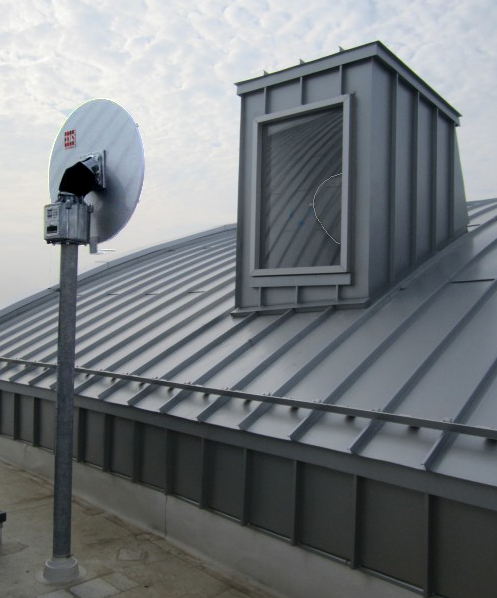
Photo 62 Under this tall and
hollow crossbeam
the reflector is able
to swing through
unhindered and
from there permits
all directions for
the reflector. The
sun can also reach
the reflector from
the side of the rack.
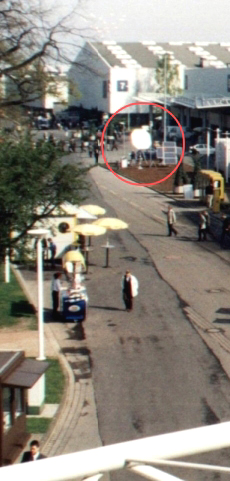
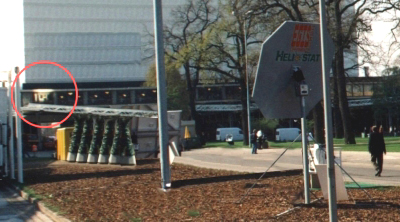
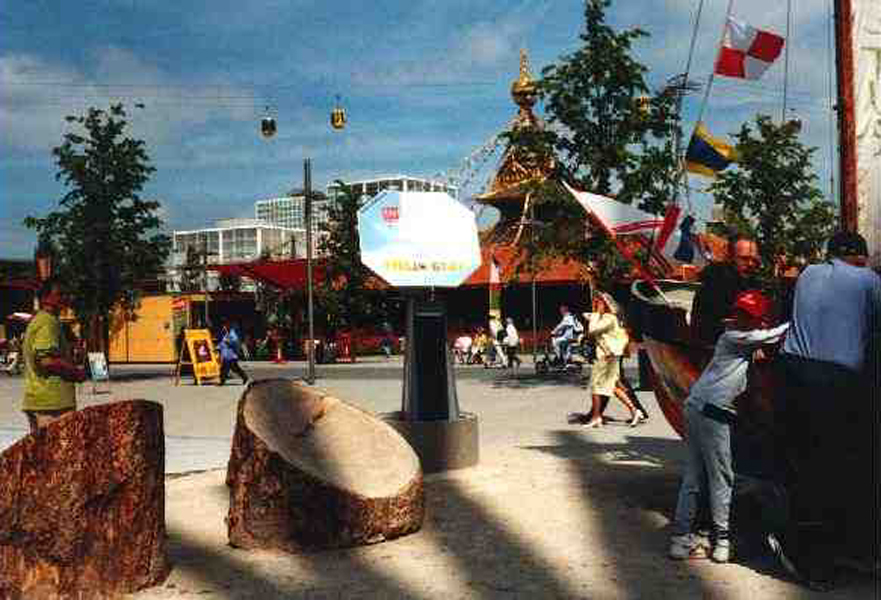
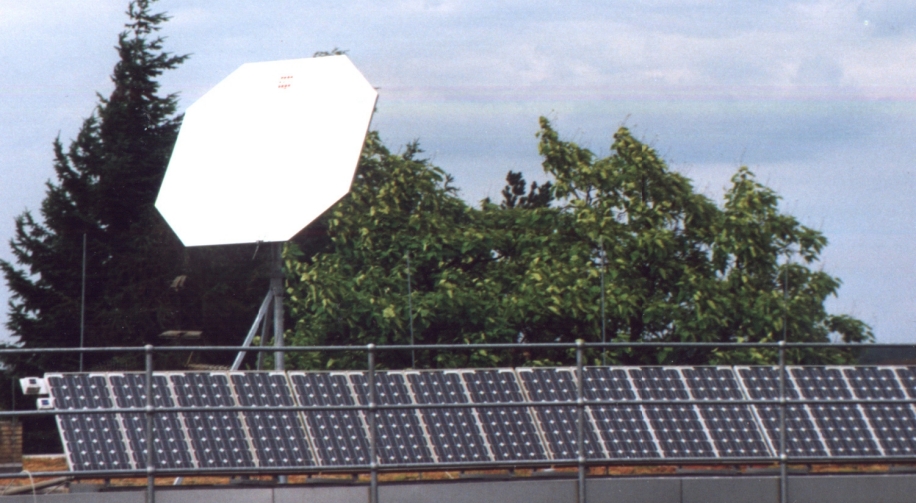
Photo 124 an EGIS-Heliostat at
the world exhibition
"EXPO 2000" in
Hannover/Germany
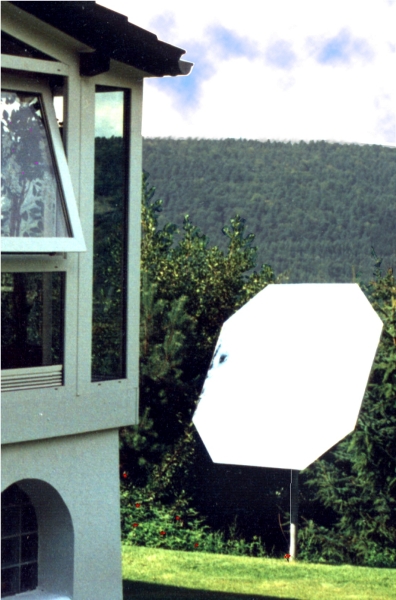
Photo 46 Heliostat with
4 m2 mirror
serving for illu-
mination of a
north oriented
winter garden.
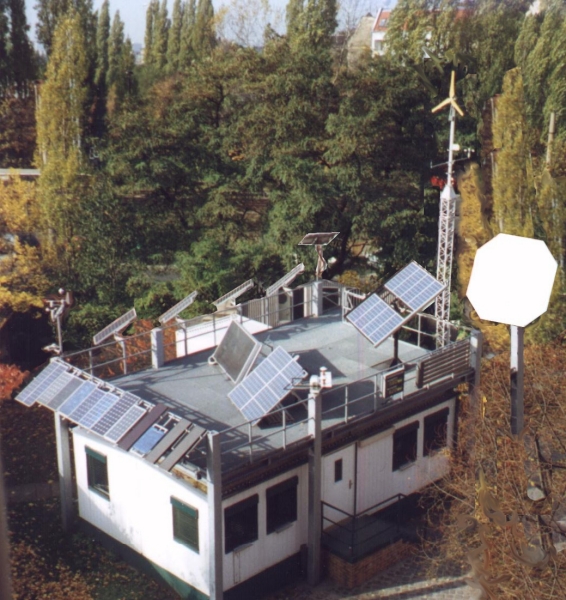
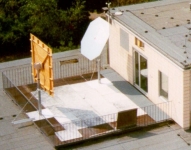
Photo 64 EGIS-Heliostat at the "Labor
für regenerative Energien"
»Villa Sonnenschein« at
Fachhochschule für Wirt-
schaft & Technik in Berlin/
Germany
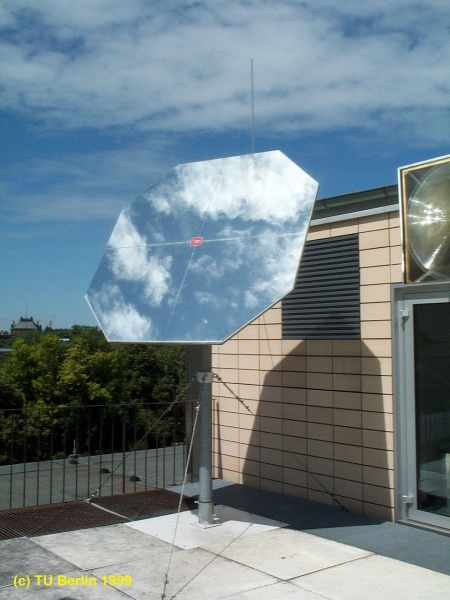
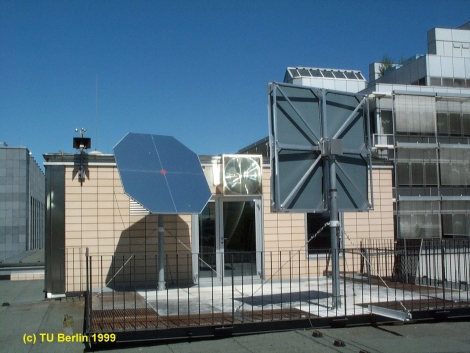
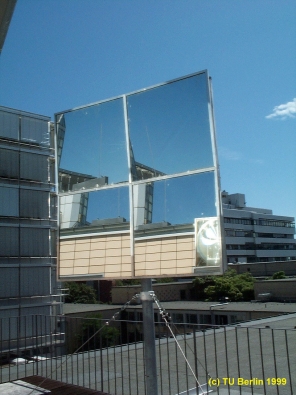
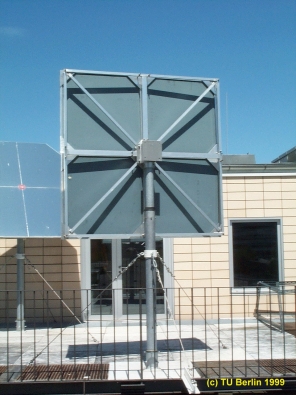
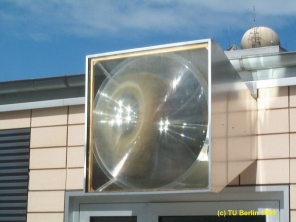
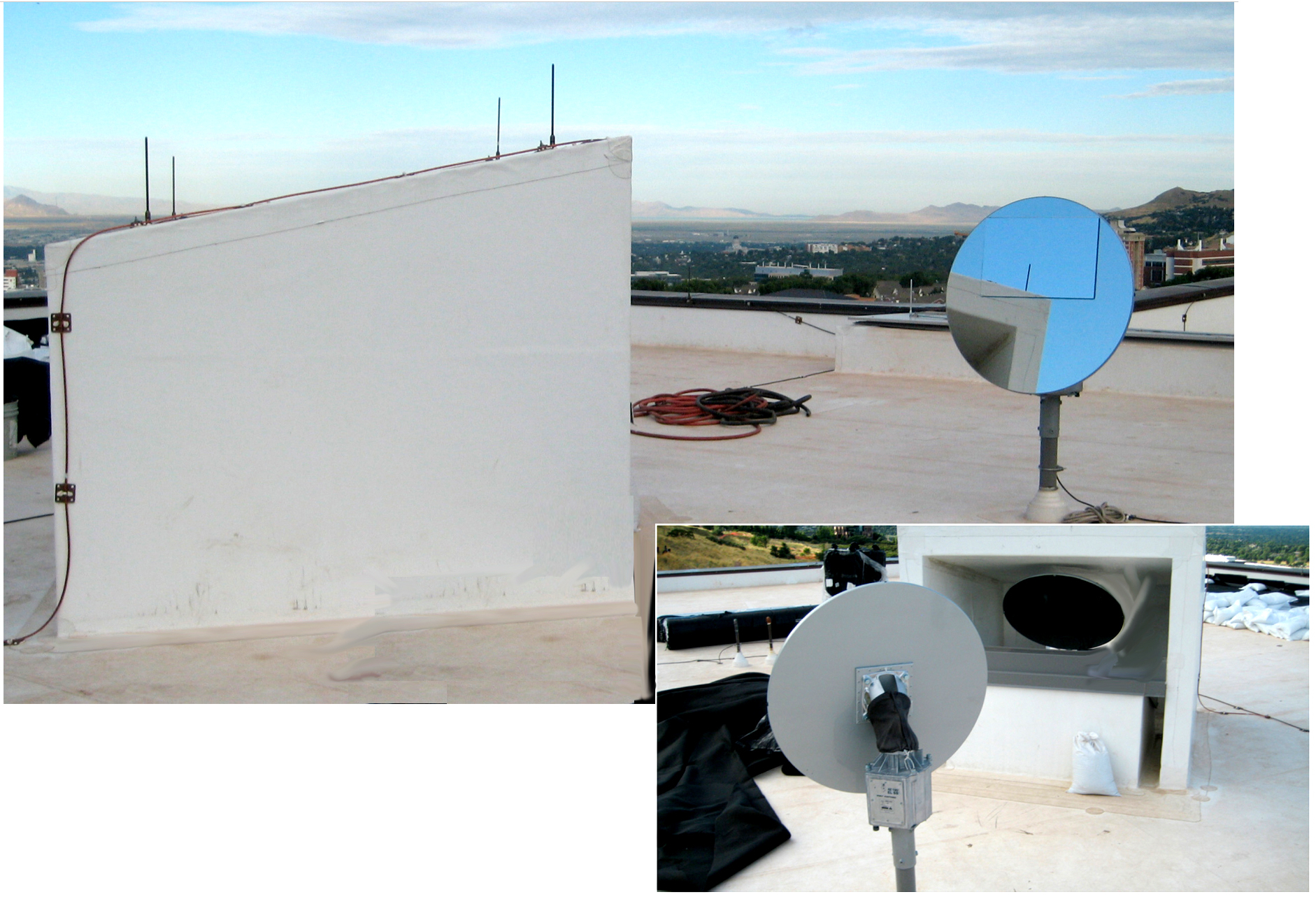
Photo 66 Research- and test equipment
of a Heliostat with a steadily
positioned mirror at the European
research project "ARTHELIO".
The sunlight is concentrated
and transmitted into the depth of
the building (Technical University
of Berlin/Germany).
Click here for detailed information
at this object.
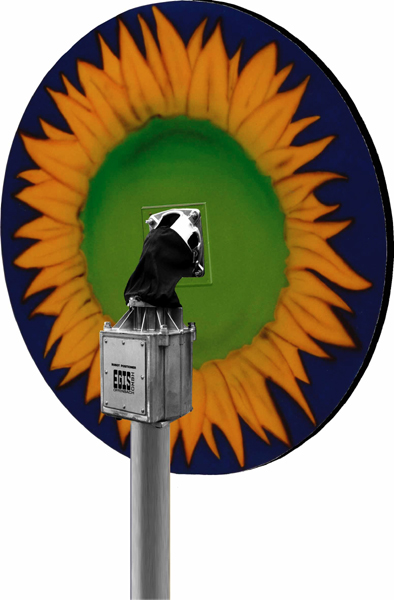
Photo 155 What about
this design
(airbrush
vanishing)?
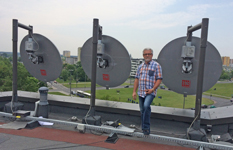
Photo 65 EGIS-rotor in duty with a
Heliostat in "Technikum
Butzbach" (ISB Technician
school for environment
Butzbach, Hessen/Germany)


SYSTEM DESCRIPTION back to the beginning


By utilization of the visible part of sunlight for illumination of buildings, you may reduce the artificialially generated part of energy. This is valid especially for office and workrooms, where daytime profil of sunlight often matches the requirements of illumination. Especially in office-rooms with a great depth you may gather a significant reduction of energy waste, because illumination can reach as 40 % of the entire energy consumption. Additionally in cold weather periods with help of sunlight (particullary using the infrared part of it) you may reduce heating affords by leading sunlight into rooms. See some figures: Top value of the sunlight energy in Freiburg (i. Br., southern Germany) reaches the value appr. 1.85 kW/m2 in a hot summer day. If you accept only the half value – for safety purposes – got in practice, than 2,3 kWs of energy are transported into the building by using the type of EGIS-Heliostat with 3 m2. And: Get that during 200 days with a total of 1400 to 1800 hours every year! This are important economic arguments and them are to be watched within modern room illumination calculations. However more important appear the physiological benefits of nature light. It is a known fact that whole mankind is sun oriented. It does not make any difference if a man is living at the equator or north-pole. You know it already, he needs the daylight for health, cosmetic, fitness and well-being. Did you know, that sunlight heals (more about that topic)?
However especially the "bringing of daylight into the depth of the room" well with conventional as also with modern architectonical methods needs considerable affords (expenses).
"Living" and "working" do not differ in the requests corresponding to the illumination. For both many things were invented, attempts were made and done at the planning and preparation of new buildings. But this is to see different with older buildings.
Here you now get a system that is even good for older buildings as for new built constructions with only low cost affords. You get a brillant cost-to-efford shape: the Heliostat made by EGIS.

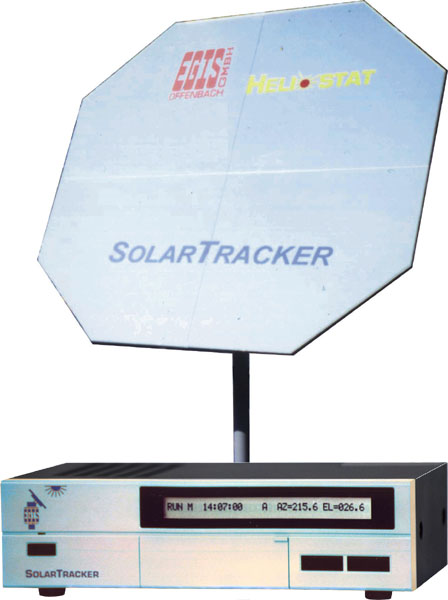
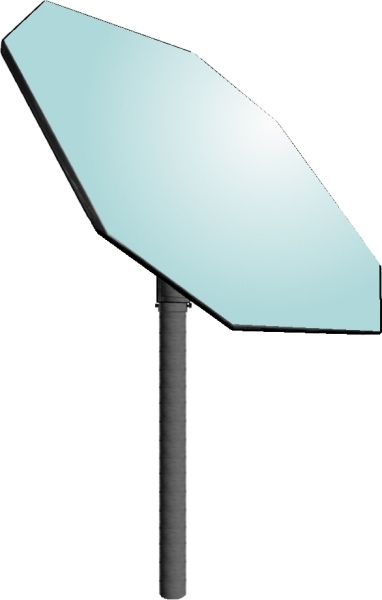
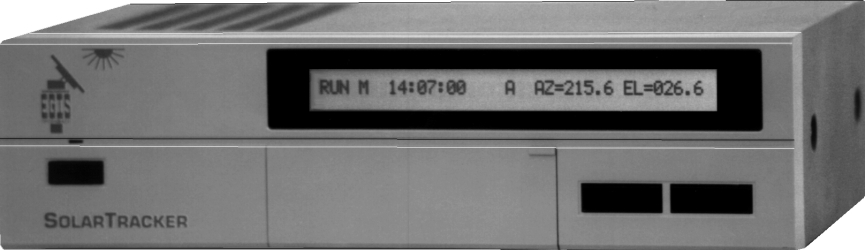
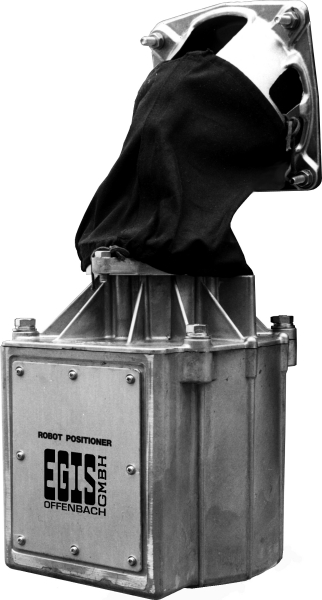
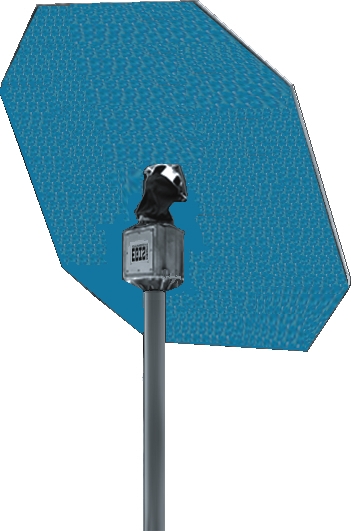
This sun deflection system consists out of the proven Solar Tracker (made by the scientific/technical production department of EGIS) and a big light reflector (flat mirror). The Solar Tracker contains the outdoor unit – the motor driven two-axis-positioner (rotor) and the indoor unit – the computer control.

The reflector/mirror consists of a 0.8 m2, 1.8 m2, 3.0 m2 or bigger back-coated flat mirror made of mineral glass (DIN 1238)*, 3 mm / 4 mm thick or of an multilayer aluminium mirror of 3 mm thickness, both versions armed by a very low torsion 25 mm aluminium sandwich plate with aluminium honeycomb core seamlessly made out of one piece. Survival of the plant with 3.0 m2 is guaranteed til wind speeds up to 150 km/h, with 5.5 m2 up to 110 km/h (proved by finite elements material- and form calculation). For the version of 1.8 m2 the guarantee is put up to 170 km/h (!) and with our smallest (0.8 m2 surface) up to a full 200 km/h! The quartered mirrors as well (two versions: 4 m2 and 5.5 m2) guarantee great brilliance and at the same time provide a very homogeneous reflected image combined with claiming low care!

Both types of mirrors have got their highlights: The mineral glass reflector is definitely heavier but it is particularly low maintenance. It provides a reflexion efficiency of about 85 % at a very low waviness. Due to the silver content of the mirror surface the coating of the mirror will undergo corrosion/weathering when exposed to damp environment. Depending on the environmental conditions the effect of 'getting clouded' will arise sooner or later. The process will be the same as it is known of traffic or pool mirrors: At the beginning the coating of the mirror gets small blunt spots, which later on can become bigger areas. The mirror is eldered by weather and environment leading to power losses. It is to be replaced from time to time! Most of the heliostats being in service are equipped with mineral glass mirrors.

As to the aluminium mirror: Due to the lower rigidity of the material aluminium the resulting residual ripple is bigger and entails a slightly enlarged light dispersion. Also in the macro and micro scales a somewhat rougher reflexion coating causes a minor broader dispersion. This material provides a reflexion efficiency of 84 %!
In the past the soft aluminium reflecting surface, which was sensible to scratches hindered the cleaning and maintenance of the reflector. This has completely changed nowadays. The overhead reflecting surface is protected by a transparent hard finishing layer. This layer is a real high-tech product: Based upon most modern nano technology, the aluminium mirror can be cleaned exactly like a mineral glass mirror. Additionally the whole mirror unit is being lightweight at the same time.
Thanks to these characteristic features even a strong hailstorm cannot destroy the reflector totally, but there may be dents and dints.
We prefer this modern product in our range of applications and strongly recommend it!

The computer control contains an electronic clock with calendars and knows all sun positions till the year 2040. Every 20 seconds for roughly a half second the two motors are activated and so it appears a hardly noticeable position correction. The plant is powered by normal net-tension – at low power consumption.

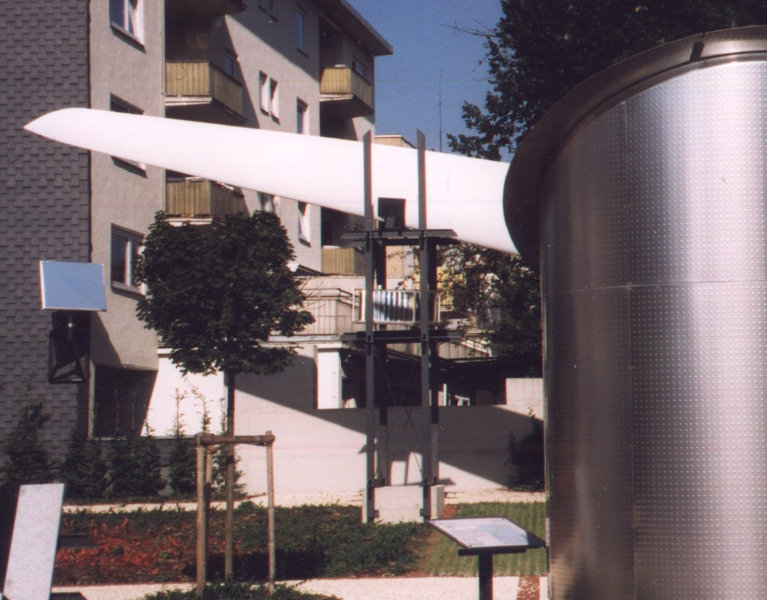
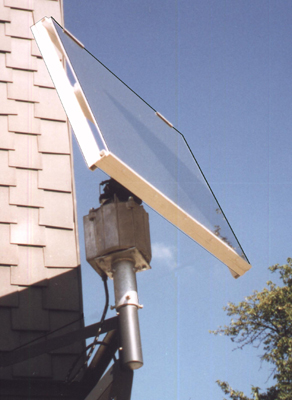
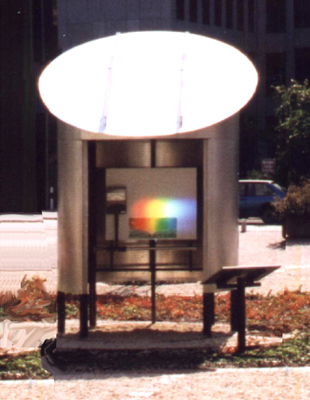
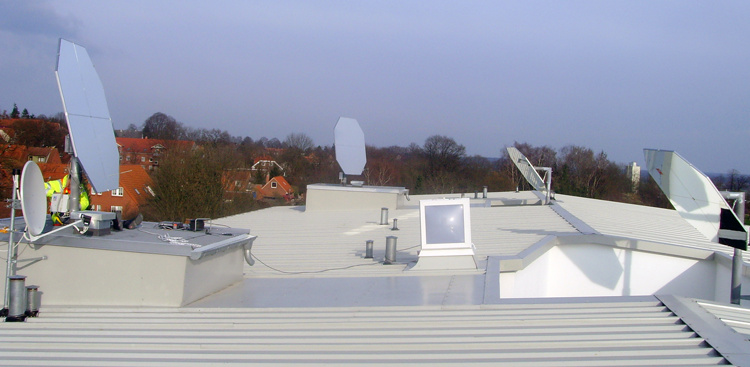
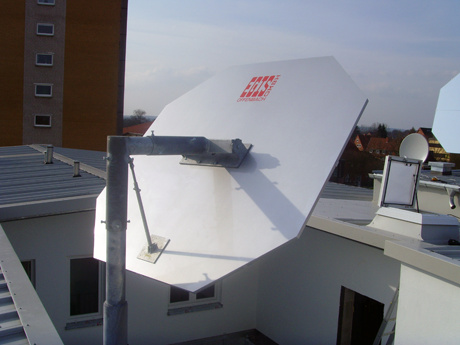
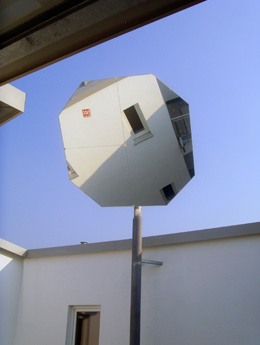
Photo 121 EGIS smallest one
(1 m Ø) in action
Photo 81 Heliostat brings
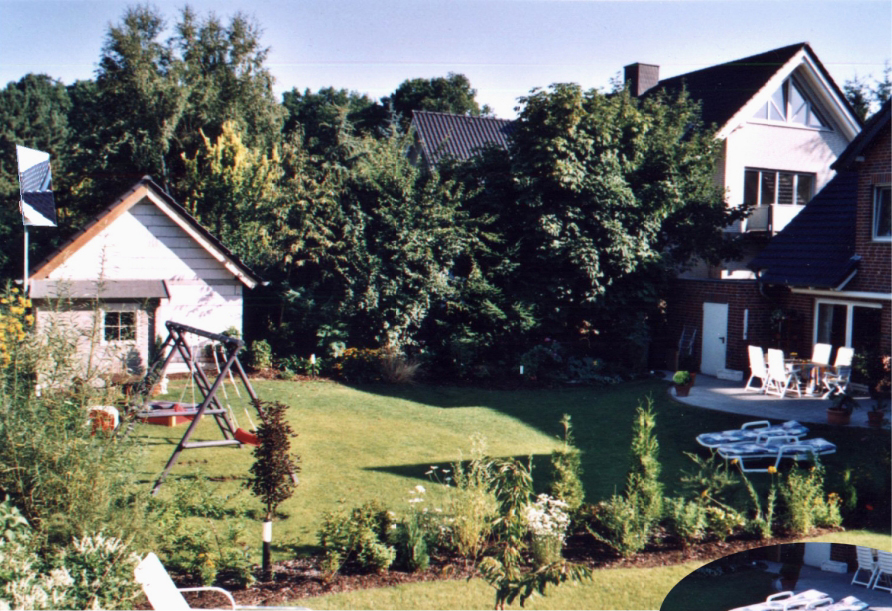
light and warmth
Photo 82 Heliostat operation
in home areas.
Click here for
detailed information
at this object.
Photo 43
Heliostat supplies
an art gallery with
natural sunlight
Photo 184 An object in Los Angeles / USA:
A 'suspended' heliostat with
downstream fixed deflection.
Photo 122 warmth and light
in dark corners


QUESTIONS & ANSWERS (click here)


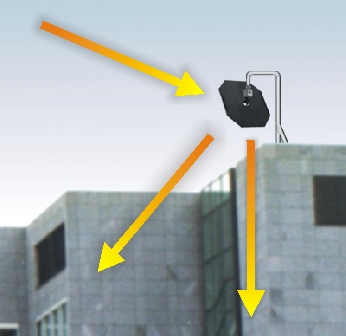
At every place where buildings have a big construction depth or roomhigness has an unfavorable ratio to roomdephtness daylight problems are preprogrammed. Preset by sky mechanic, sunrays get down on earth at a certain angle. Using conventional construction methods this light is usable only right near the window. Early morning or late evening the sun rays get down under low elevation angles, probably out of poor azimuth directions. These parts of building could not be used optimally.

The EGIS-Heliostat manages and leads light (daylight!) using physical laws (light in angles equais light out angles) to the wished point within the movement borders of the rotor mechanics.
The rotor-head mounted mirror anytime points exact into the middle between sun-position and light-goal-point. It leads by this automatically sunlight – over the whole day – (within the physical possibilities) into the depth of the room.
Thereby the rotor is able to follow all sun-ranks, that are between 90° east until 270° west, all time long, to match any goal within this region, wherby a maximum lifting of 68 degrees for daily tracking is available. All further sun positions therefore from north (0°) and from west (270°) until north (360°) could be used also, however only at a restricted target angle.
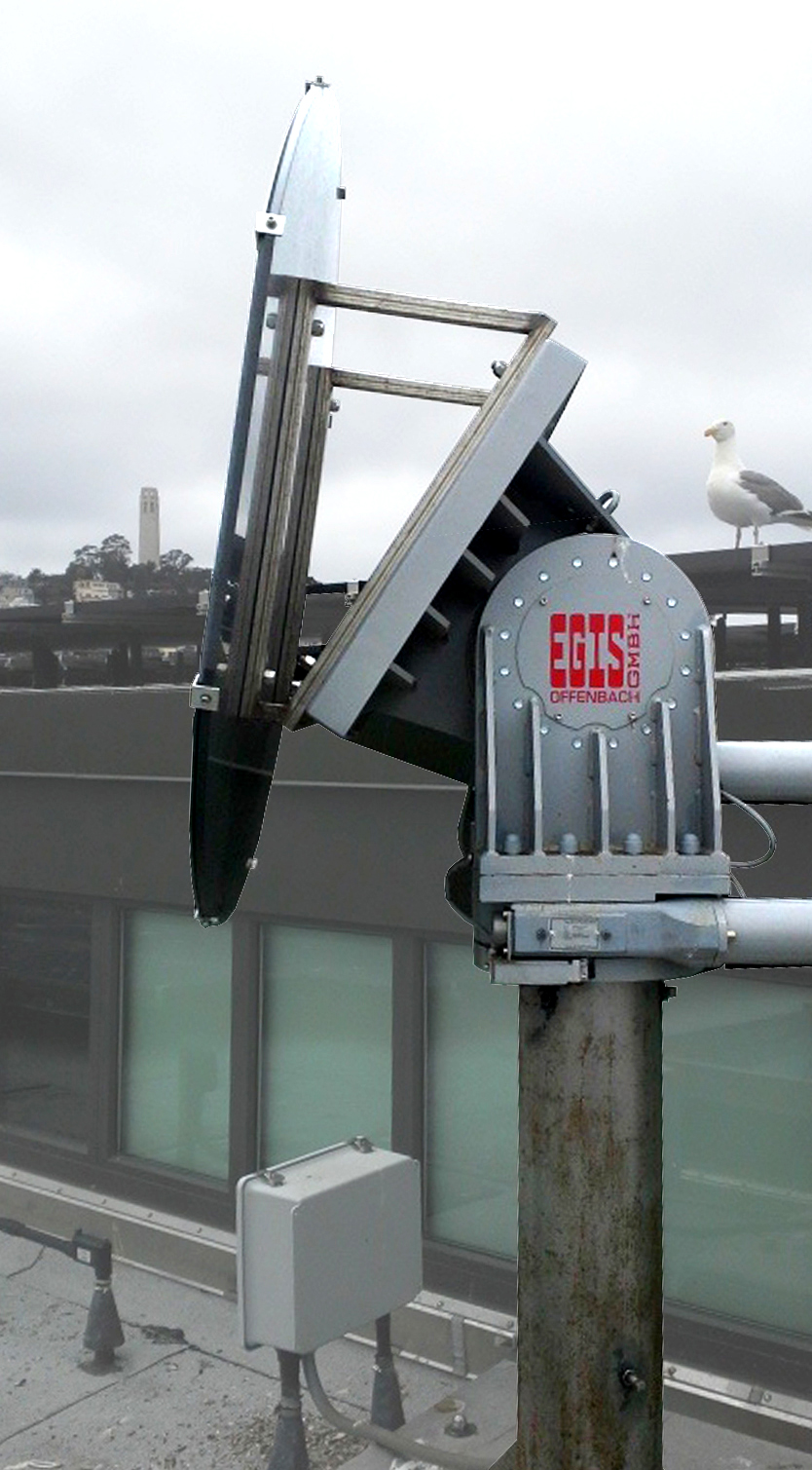
The rotor is normally mounted top of mast. Between mast and rotor housing an adaption at the local definite mast/pillar/standing is required. Optional there are ready fire Zn-plated mastholders for 3.5" (90 mm) and for 5.5" (130 mm) mast available.

Between rotor and computer control distances from 100 up to 200 m are acceptable (example of applying the heliostat out of a greater distance). There is a 14-wire connection cable required. A LCD display assists with the settings and provides information. Once the electric installation is finished, the built-in clock with date has to be set – using the integrated key pad – and the georeferenced location has to be entered in lines of longitude and latitude.
Up to 50 (!) different wished points of reflection can be chosen via 4 keys (higher-deeper-left-right) and stored. All given input data are save stored. Even after power blackout the Heliostat resumes working.
Every 20 seconds for about half a second the motors are active and so a hardly noticeable position correction is performed. At the end of the daily deflection movement the rotor rests and control falls into sleep mode.
Next morning the mirror drives automatically on his start position and starts again with his task corrections or new target positions can be made freely at any time.


QUESTIONS & ANSWERS (click here)


*  =  The mirror is eldered by weather and environment leading to power losses. It is to be replaced from time to time (please ask us for other materials.)


Reflektor Steuer-Einheit Rotor
reflector control unit v- & h-Rotor


EXTENSIONS back to the beginning


O

Photo 16

M A S T T O P / M A S T D E S K

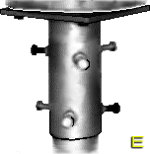
Mechanical connector between mast bent (of a round mast) and the rotor. It consists out of a heavy steel(desk)panel with a tube welded on. This part of the tube then is slipped over the Mast. This construction allows to turn the unit on the mast. 6 clamp screws feature both leveling as well as fixing the system. The tube is clamped with 4 attached screws onto the (desk)-panel. Both versions listed below are capable to carry the max. allowed load.

masttop/mastdesk for 79 to 89 mm Ø (3.5")-mast, weight: 5.5 kg

masttop/mastdesk for 118 to 128 mm Ø (5.0")-mast, weight: 8.0 kg


O

Photo 144

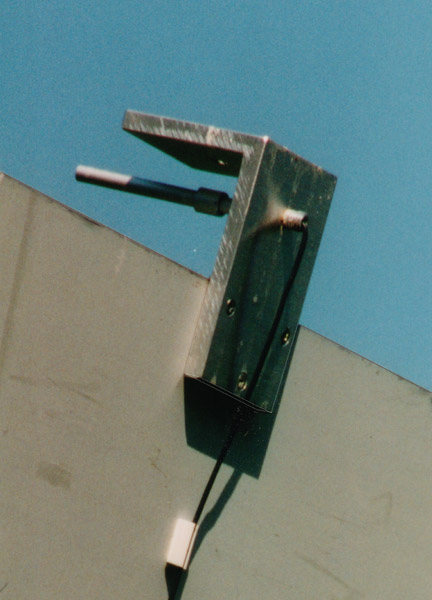
L I G H T   D I R E C T I O N   F I N D I N G   T U B E

The light-direction/calibration tube allows the easy and comfortable finding of the direction/position with the maximum of light. It consists out of a inside matted tube with a sensor attached at the tube-base bottom. A 5 m long litz wire is connected solidly. Attached are a universal sensor-fix and mounting-material.

The tube carrier has to be mounted plane onto the object to be positioned, so that the direction finding tube stands perpendicular upright on the sight-plane. The direction finding device can be connected to any ohm-meter (multimeter) usual in the trade and serves in this application to manually align the rotor-head with the keys on the control-unit (UP/DOWN/EAST/WEST). A fully automatical position-optimization is possible along with the device-extension "ANALOG"-signal-input. Thereby signal-peaks are achieved, not manageable in manual operation. In the Mode "AUTOFOCUS" – automatically – after each astronomical positioning an investigation for a better signal is originated. The results are displayed with a 8 bit word in the control-unit`s display and output via the serial interface together with other data, if needed.


O

Photo 152

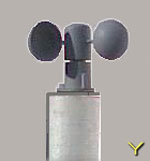
W I N D - S P E E D - S E N S O R / S H E L L - A N E M O M E T E R

The Anemometer performs the measurement of the local appearing wind-speeds. The 4-wire-interface at the control unit is quite ready to read and process the signals from the anemometer.

Details:

  • 3-shell-system
  • shell ring outside-Ø: 120 mm
  • shell-Ø: 40 mm
  • profile: 70 mm
  • material: ABS
  • pulse transducer system: magnet/reed switch
  • pulse-rate: 60 km/h = 16.8 m/sec. = 47 Hz
  • suitable for mounting onto or besides the mast


SPECIFICATIONS back to the beginning


COMPUTER CONTROL:   EPS-103 mod.
power 230/115 Volt AC (12/24 V DC version also available)
consumption 16 VA Standby; 130 VA max.
display + info LCD diplay
prog. storage 64 KB RAM
motor voltage 24 V DC for azimuth and elevation motor
int. resolution: azimuth 0,0100°/pulse
elevation 0,0025°/pulse
outlines (W x H x D) 300 x 80 x 200 mm
mass 4 kg
packing (L x W x H) 39 x 29 x 15 cm
temperature limits: operational –5 °C to +40 °C
survive & storage: –15 °C to +60 °C


ROTOR:   EPSR-203 mod.
special features 2 separeted motors for azimuth and elevation movements
motor voltage 24 Volt DC
motor consumption max. 20 Watt
'control device to rotor' cable 10 x 0.6 mm2 (phone cable will be good!)
4 x 1.0 mm2 (motor power)
over 100 m 1.5 mm2 required
mechanical control spindle movements and toothgears
max. azimuth turn angle 180°
max. elevation turn angle 68°
return accuracy (part load) max. 0.3° (at the end positions there may be differences)
tracking resolution > 0.2°
speed: azimuth approx. 4°/sec.
elevation approx. 2°/sec.
housing alu, pressure melted, rugged
outlines: diameter approx. 318 mm
height approx. 625 mm
Click here to see a dimension sketching!
mass approx. 30 kg
mechanical connections: reflector see sketch
mast surface = approx. 250 mm Ø with 4 screw threads (srews included by shipment)
reflector dimensions max. 5.5 m2
max. wind velocity 60 km/h in operation,
up to 200 km/h belonging on type (wind-effective reflections area)
(strength proof)
temperature limits: operational –20 °C to +65 °C
survive & storage –30 °C to +65 °C


REFLECTOR
dimensions 1.0 m Ø (approx. 0.8 m2); thickness approx. 30 mm or
1.5 m Ø (approx. 1.8 m2); thickness approx. 30 mm or
1.5 m x 2.12 m (approx. 3 m2); thickness approx. 30 mm or
2.45 m x 2.45 m (approx. 5.5 m2); thickness approx. 30 mm
mass approx. 20 kg / 36 kg / 65 kg / 90 kg
material coating crystal backside mirror 3 mm / 4 mm (DIN 1238); alu-honeycomb-alu sandwich, approx. 27 mm
contortion-deflection under max. load max. 15 mm from central anchor point
temperature limits: operational –10 °C to +60 °C
survive & storage –30 °C to +60 °C


Standing arrangement of the Heliostat for all kind of applications with above directed reflection:
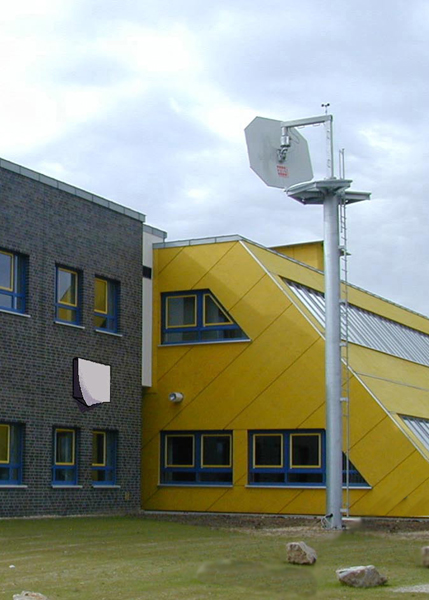
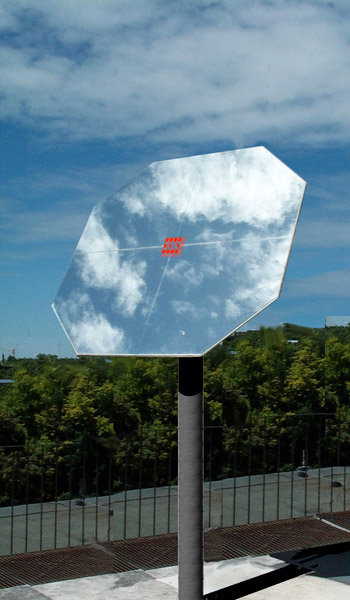
Photo 51 Photo 56 Upright mast mounting allows free
surround action with reflection di-
rections from horizontal to upwards.
Very cost saving.
Standing arrangement of the Heliostat for all kind of applications with down directed reflection, e. g. air shafts, built-up courtyards and lightpipes:
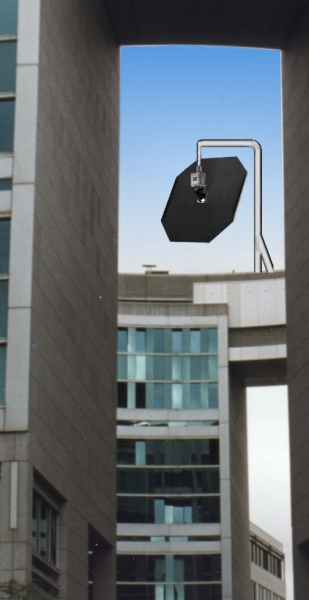
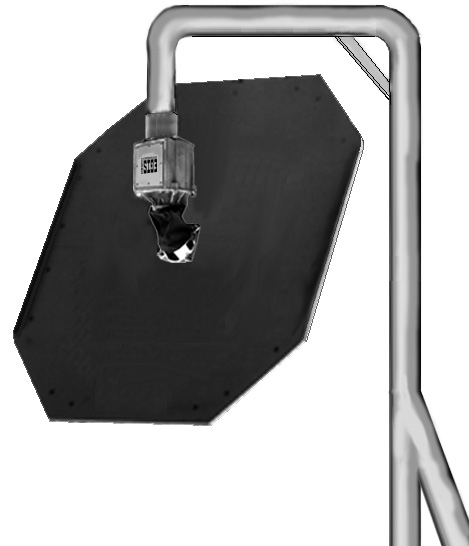
Photo 78 Photo 59 Under this tall and hollow crossbeam
the reflector is able to swing through
unhindered and from there permits all
directions for the reflector. The sun
can also reach the reflector from the
side of the rack.
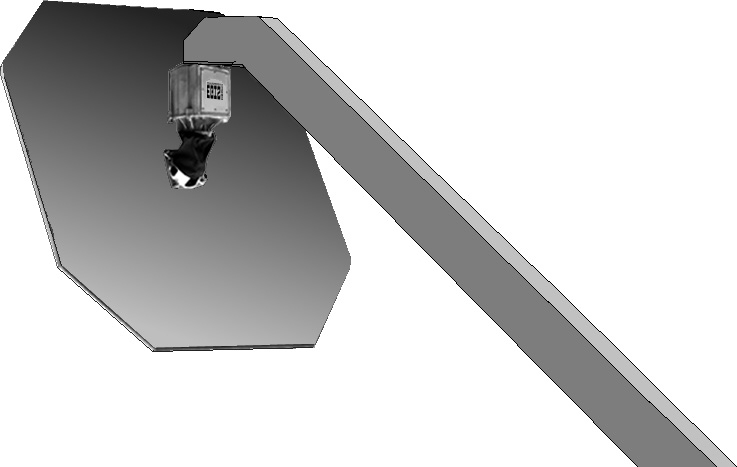
Photo 58
This kind of montage allows
only reflector directions which are
turned away from the rack.
Photo 120 The EGIS Heliostat in 'hanging'
design at 'Solar-Forschungs-Institut
Jülich' (university Aachen/Germany)
Photo 184 The smallest of EGIS with additional
second deflection for the illumination
of a gallery object.
Standing arrangement with down directed reflection via mirror:
Photo 142 Heliostat Photo 149 additional redirecting
of sun light with a
steadily positioned
mirror


QUESTIONS & ANSWERS (click here)


PRICE LIST back to the beginning


TYPE | (excl. VAT) EURO
Helio 1.0 FR round reflector, approx. 0.8 m2 mirror (1 m Ø), rotor incl. controller (example photo) 7 998.00
Helio 1.5 FR round reflector, approx. 1.8 m2 mirror (1.5 m Ø), rotor incl. controller (example photo) 9 498.00
Helio 3.0 F8 octagonal reflector, approx. 3 m2 mirror (1.5 x 2.12 m), rotor incl. controller 11 498.00
Helio 5.5 F8 octagonal reflector, approx. 5.5 m2 mirror (2.45 x 2.45 m), rotor incl. controller 14 298.00


OPTIONS | (excl. VAT) EURO
Masttop/Rotor Table 89 mm Ø (3.5") mechanical interface between rotor and mast (max. 89 mm Ø) 198.00
Masttop/Rotor Table 128 mm Ø (5.0") as above, however for max. 128 mm Ø mast 298.00
including mounting hardware
Light direction finding tube for the easy and comfortable finding of the direction/position with the maximum of light 378.00
Wi-S1 wind-speed-sensor/shell-anemometer 317.35


Other sizes and designs are possible. Please tell us about your particular special application!


Technical improvements are subject of change!


      CONTENT:   system description | extensions | specifications | price list || questions & answers     
      IMAGES:   the individual pieces of equipment | standing and hanging arrangements     


EGIS-Logo E       G       I       S
EQUIPMENT GESELLSCHAFT für
INTERN. ELEKTRONIK SYSTEME GmbH
Flutstraße 34 – 36
D–63071 OFFENBACH/MAIN
Tel.: 069 / 85 83 27
Fax: 069 / 85 78 63
<< Homepage 20 minutes from Airport Frankfurt – 20 minutes to Frankfurt City E-Mail: Helio@egis.eu